Skip to content
Immobilien4you · France
Property for sale in Alsace and Lorraine
Houses, estates and building plots just across the border — one to two hours by car from Ramstein and Kaiserslautern. We guide you through the French purchase in English, from the first viewing to the notaire.
Available now
Our listings in France
Everything shown here is genuinely available — the list is drawn straight from our portfolio and changes the moment a property is taken.
Where exactly
Alsace or Lorraine — the difference is worth knowing
Alsace
The départements Bas-Rhin (67) and Haut-Rhin (68), between the Vosges ridge and the Rhine. Half-timbered villages, the Route des Vins, Strasbourg and Colmar. Sought after and priced accordingly — the closer to Strasbourg, the more so.
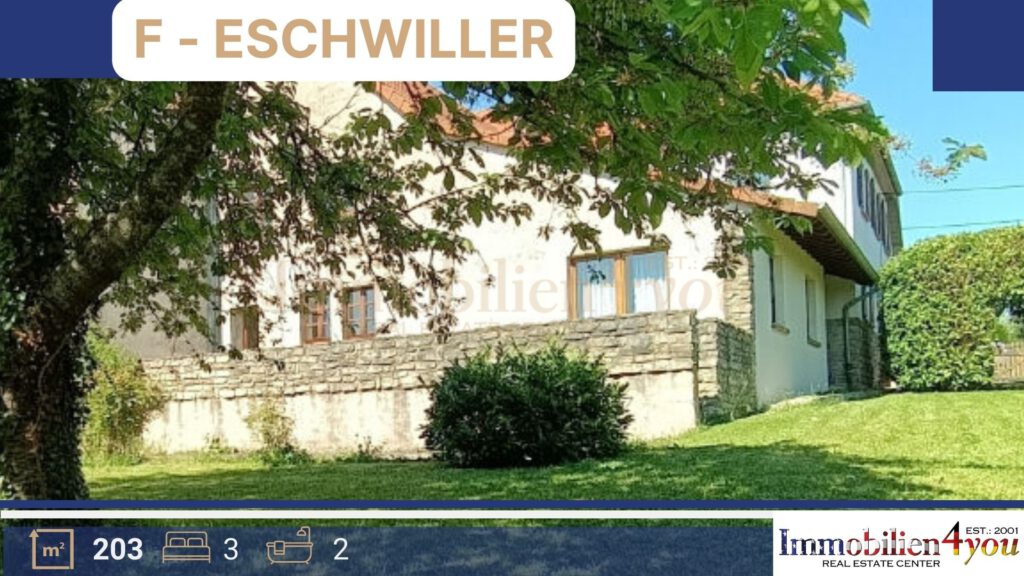
From our current portfolio, Eschwiller in the Northern Vosges sits here.
Lorraine
Above all the Moselle département (57), which borders the Saarland and the Western Palatinate directly. For buyers from the KMC often the closer option — and usually the better value, with more land for the money.
Montbronn and Lemberg, among others, are handled by us here.
Almost everyone types “Alsace” and means the whole border region. We tell you where each property actually is.
The path there
How buying a house in France works
- Viewing We come along and translate. Bring the surveyor straight away if you like — ours works in-house.
- Compromis de vente The preliminary contract. It binds both sides and already sets out every condition, such as the financing clause.
- Ten days to reconsider The délai de rétractation: buyers may withdraw without giving a reason and at no cost.
- The notaire checks Pre-emption rights, charges, mandatory surveys. One notaire may act for both sides — a second one costs you nothing extra.
- Acte de vente The final deed, usually two to three months after the preliminary contract. After that the house is yours.
What comes on top of the price
| Frais de notaire, existing property | roughly 7–8 % of the price |
|---|---|
| Frais de notaire, new build | roughly 2–3 % |
| Agency commission | often already included in the price (FAI) |
| Taxe foncière | annual, paid by the owner |
| Taxe d’habitation | still due on second homes |
Status September 2026, no warranty. The notaire gives you the exact figures; tax questions belong with a tax adviser.
Second home
Holiday home, weekend place, retreat
Many who contact us are not looking for a new home but for a second one. That is a different calculation — here is what actually matters.
Distance
One to two hours from Ramstein or Kaiserslautern. Close enough for a weekend to be worth it — and that is what decides whether a second home gets used or quietly stands empty.
Running costs
Every owner pays the taxe foncière. The taxe d’habitation no longer applies to a main residence, but it does to a second home — and some communes add a surcharge.
Letting it out
Possible, but it must be registered. Tourist communes impose conditions and caps. Settle this with the commune before you buy, not after.
Frequent questions
What we get asked most
What does a house in Alsace cost?
It depends heavily on the location. In the villages of the Northern Vosges and in rural Lorraine, 200,000 to 400,000 euros still buys a full house with a garden; around Strasbourg and along the Route des Vins prices are considerably higher. The listings on this page show the range we actually work in.
Can Americans buy property in France?
Yes. France places no restrictions on foreign buyers and no permit is required — the process is the same as for a French citizen. But owning property grants no right to stay: as a non-EU citizen you remain bound by the Schengen rule of 90 days within any 180-day period, unless you hold a long-stay visa or your status covers you. Clarify this before you buy, not after. Status September 2026, no warranty.
What are the closing costs in France?
On an existing property the frais de notaire — notary fees and transfer taxes combined — come to roughly 7 to 8 percent of the purchase price. On a new build it is about 2 to 3 percent. The agency commission is often already included in the advertised price; you will see it marked FAI (frais d’agence inclus). Status September 2026, no warranty.
How does buying a house in France work?
Once you agree on a price, a preliminary contract is signed — the compromis de vente. You then have ten days to withdraw without giving a reason (delai de retractation). The notaire checks title, easements and the mandatory surveys; the final deed, the acte de vente, usually follows two to three months later. Unlike in the United States, one notaire can act for both sides — you may bring your own at no extra cost.
How far is it from Ramstein and Kaiserslautern?
One to two hours by car. The Moselle department borders the Saarland directly, so parts of Lorraine are closer to the KMC than the Rhine valley is. That distance is what decides whether a second home actually gets used or quietly stands empty.
What is the difference between Alsace and Lorraine?
Two distinct historical regions, both part of today’s Grand Est. Alsace covers the departements Bas-Rhin (67) and Haut-Rhin (68), between the Vosges and the Rhine. Lorraine lies to the north-west; its Moselle departement (57) borders the Saarland and the Western Palatinate. Most people type "Alsace" into a search box and mean the whole border region — we tell you where each property actually is.
Can I rent the house out when I am not there?
Yes, but it must be registered with the commune, and tourist areas apply limits. Budget for the running costs of a second home as well: the taxe fonciere is paid by every owner, and the taxe d’habitation still applies to second residences — some communes add a surcharge.
Looking for something specific?
Most properties in France change hands before they are ever advertised. Tell us what you are looking for and we will come back to you the moment something fits.